When selecting an automotive fuse, it is essential to comprehensively consider various factors to ensure its compatibility and safety. Below are some detailed considerations:
Specifications
Rated current
It must match the load current of the circuit. If the rated current is too small, the fuse may blow during normal operation, affecting the proper functioning of automotive electrical equipment.
Conversely, if the rated current is too large, the fuse may fail to blow promptly in case of overload or short circuit, thus failing to protect the circuit. This could lead to safety hazards such as
overheating wires or electrical fires.
The voltage of automotive circuits typically includes different specifications such as 12V and 24V. The rated voltage of the selected fuse must be equal to or higher than the operating voltage of the
automotive circuit. If the rated voltage is too low, the fuse may be punctured and lose its protective function.
The electrical system voltage of general passenger cars is 12V, so fuses with a rated voltage of 12V or higher should be selected.
interrupting capacity
The breaking capacity refers to the ability of a fuse to safely interrupt the circuit under conditions of high current, such as short circuits. Fuses with appropriate breaking capacity should be
selected based on the maximum short-circuit current that may occur in the automotive circuit.
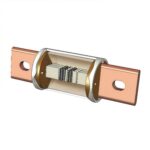
For circuits with higher power, such as those for starting motors, the current during a short circuit may be extremely large. Therefore, it is necessary to select fuses with higher breaking capacity to
ensure the circuit can be quickly disconnected in the event of a short circuit, preventing damage to other electrical equipment.
Quality
High-quality fuses are made with superior materials and advanced manufacturing processes, ensuring stable performance and accurate melting characteristics, which reliably protect circuits.
Inferior fuses may suffer from impure materials or rough manufacturing, leading to issues such as false tripping or failure to melt when needed.
– The quality of a fuse can be initially assessed by observing its appearance, such as ensuring the surface is smooth and free of cracks, and the terminals are secure and free of oxidation.
Dimensions and Installation
Dimensions
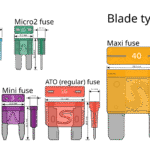
Automotive fuses come in various sizes, such as mini, small, medium, and large. When selecting a fuse, ensure its size matches the slot in the car’s fuse box. If the size is incorrect, it may not install
properly or become loose, leading to poor contact and potential circuit failure.
When replacing a fuse, refer to the vehicle owner’s manual to determine the specific size and specifications of the required fuse.
Installation
When installing a fuse, ensure the correct installation method is followed. The fuse should be securely inserted into the slot of the fuse box to prevent loosening. Additionally, pay attention to the
polarity of the fuse (if applicable) and ensure the correct installation direction.
During the installation process, use appropriate tools to avoid damaging the fuse or fuse box.